
When you’re in the flow of approving transactions in YNAB, it’s so easy to skip the YNAB memo field. But that little field is one of the simplest ways to make your budget clearer—both now and later.
To be clear: not every transaction needs a memo. Your monthly electric bill probably speaks for itself. But for many day-to-day purchases, a quick note (even just a few words) can save you time and frustration later.
1) Find purchases later—fast
Have you ever thought, “Wait… when did I buy that?” or “How much did I pay for it?”
If you add a simple memo like “new running shoes” or “air filter,” you can search your transactions later and get the answer in seconds—no scrolling required.
2) Quickly total up spending for a specific “mini-category” (like a trip)
Sometimes your categories are intentionally broad—because you don’t want (or need) a separate category for every little thing.
For example, maybe you have one general Travel category, but you take multiple trips throughout the year. If you put the trip name in the memo field—like “Chicago weekend” or “Italy 2026”—you can later search that memo term and instantly pull up every transaction tied to that trip.
Even better: once those transactions are filtered, you can use the checkbox in the left-most column to select them and see the total. It’s a simple way to answer the question, “How much did that trip actually cost?” without creating extra categories or doing any complicated tracking (or math).
3) Keep track of who bought what
For households with more than one spender, memos are a simple way to add clarity.
A quick “Barry” / “spouse” / “teen” (or initials) can help you understand spending patterns without turning your budget into a detective project.
4) Note what time period a subscription covers
Some subscriptions are straightforward, but others aren’t—especially if you prepay, renew early, or get billed annually.
A memo like “Spotify – May 2026” or “Costco membership renewal (annual)” makes it much easier to understand what that charge was for when you’re reviewing later.
5) Track reimbursements (and avoid the “did they pay me back?” spiral)
Reimbursements are one of the easiest places to lose clarity.
If you paid for something and someone reimburses you later, a memo like “Reimbursed by Sarah for concert tickets” can help you confirm what happened—especially weeks (or months) down the line.
And if you’re still waiting on the reimbursement, you can note that too: “Waiting for reimbursement.”
6) Explain non-routine deposits
Not every deposit is income—and not every non-routine deposit is obvious later.
A memo like “Tax refund,” “Birthday gift from Mom,” or “Sale of Accord” can prevent confusion when you’re looking back and wondering why your account jumped that week.
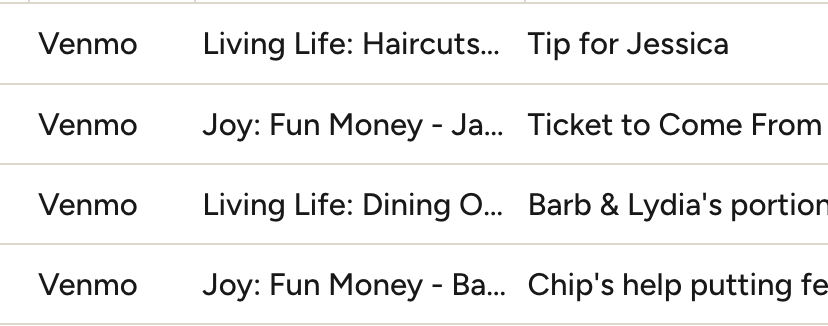
7) Make Venmo transactions actually meaningful
If your transaction list is full of entries that just say ‘Venmo,’ you’re not alone. A quick memo like “dinner with Jess” or “money from Rob for 5/29 concert tickets” turns those vague entries into something you can actually understand later.
The bottom line
The memo field isn’t about being perfect or writing a novel. It’s about giving your future self a breadcrumb trail.
It takes a few seconds in the moment—and trust me, you’ll be grateful for it later.
Leave a Reply