
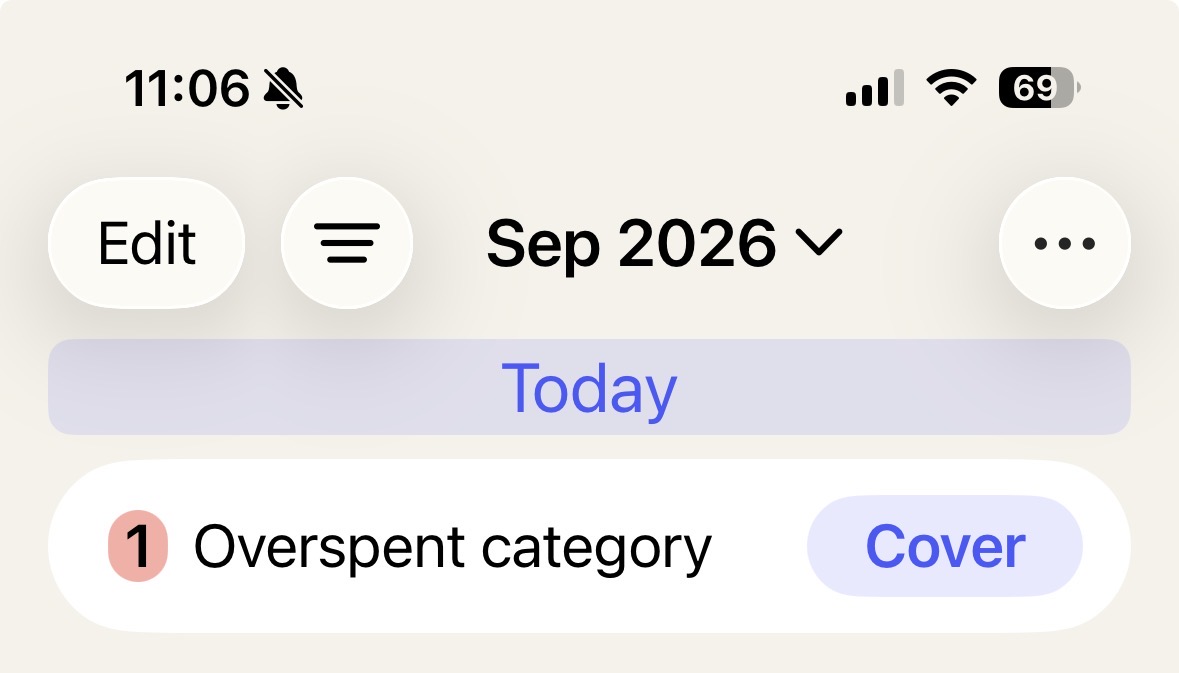
I’m writing this on October 2. When I did my daily YNAB check-in this morning, I saw that some transactions dated September 30 had imported overnight, which created some overspending on my September budget. This is why it’s so important in a new YNAB month to go back to the prior month budget screen at least once a day for a few days. During this window, I go ahead and fix the overspending in the prior month by moving money from another category to cover the overspending.
Why is it important to cover last month’s overspending? Because any cash overspending (i.e. spending from a cash account) last month reduces the amount in Ready to Assign (RTA) this month. Ideally, you’re giving every dollar a job, so your RTA is zero most of the time. If that’s the case, then prior month overspending will put this month’s RTA in the negative. Then you have to cover the overspending this month.
If the prior month overspending was on a credit card, then your credit card payment amount will not match your balance and you’ll need to assign that money directly in the current month to pay off your credit card.
Overspending happens. And when it does, the ideal is to cover it immediately so you don’t have to worry about clearing out any overspending at the end of the month. But even when that is your practice, overspending can sneak into your prior month unless you keep an eye on it at the beginning of the month.
This morning, an alternative would have been for me to change the dates of those transactions to October 1. Unless it’s an unusual transaction there would be money in the October budget to cover it. In general, though, I like YNAB to reflect reality, so I’m willing to take a little extra effort to cover overspending in September.
Leave a Reply